A Child's Story
From hardship to a classroom. From uncertainty to possibility.
From a place of hardship to a classroom. From uncertainty to possibility.
In rural India, many children grow up in communities where education is not accessible, where daily survival consumes everything, and where the future feels fixed by circumstance. This is the story of one child whose life was changed when they came to our children's home in India.
A Life Without Options
In many rural communities, the pattern is predictable. Children grow up without education. They help with subsistence farming or day labor. The cycle continues. There is no intervention, no moment when someone says, "You have potential. You could be something more."
For children in these communities, the options are limited. They can follow their family into whatever work is available. They can go to the cities looking for factory or construction work. They can settle into the same poverty that marks their parents' lives. There is no imagined future beyond survival.
This is not because these children lack intelligence or capability. It's because they were born into a context where education is not accessible and dreams are a luxury. When you're hungry, when your family is struggling, the future is not something you think about. The present is what consumes you.
Everything Changes at Our Children's Home
When a child comes to our children's home in India, it represents more than moving to a new place. It represents a complete reorientation of their life and their possibilities.
They have a bed. For the first time in their life, they have a consistent place to sleep, with clean sheets and a mosquito net. They have three meals a day, which is more nutrition than they had in their village. They have a uniform, which signals that they belong to an educational community. They have access to clean water, to medical care, to bathrooms with sanitation.
But the material provisions are just the beginning. What our children's home provides is something more fundamental: structure, care, and dignity.
The Power of Education
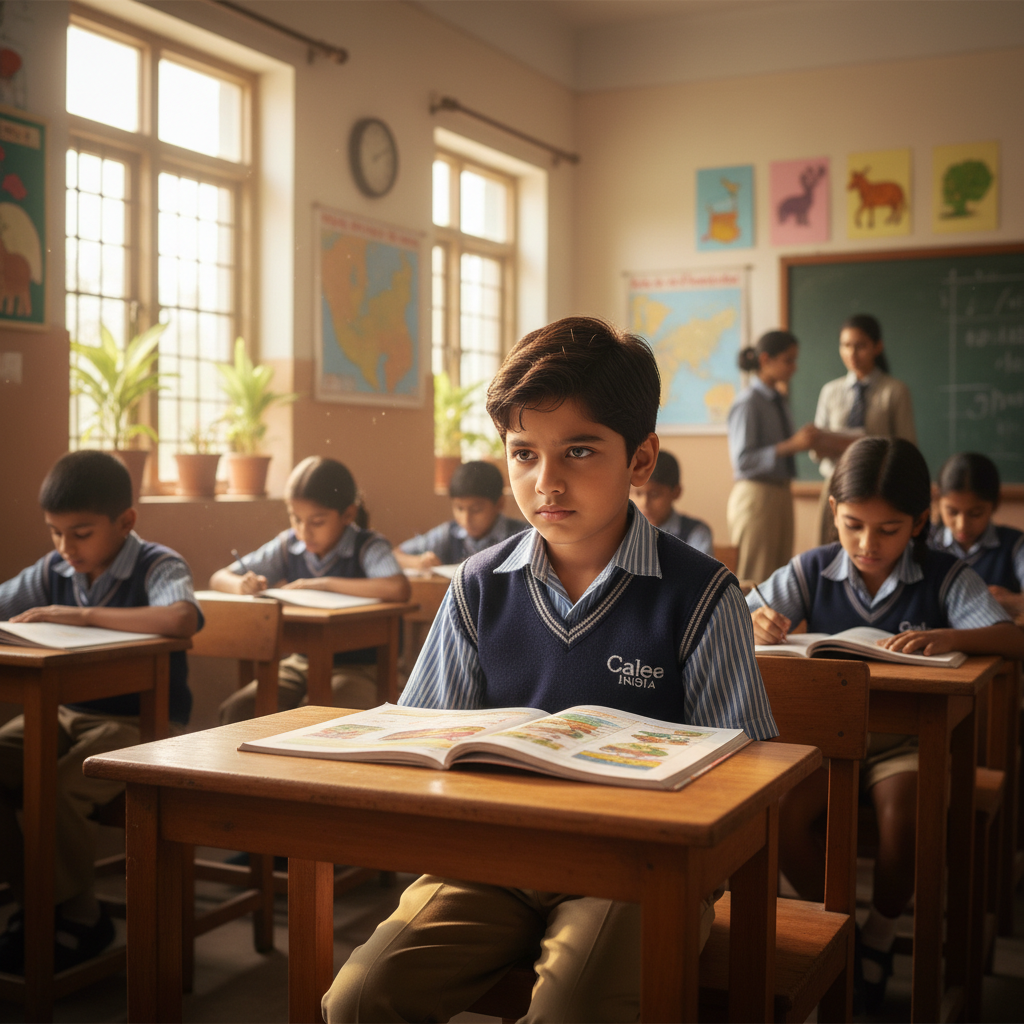
Every morning, children wake up and go to school. They sit in a classroom with other children who, like them, came from communities where education was impossible. They learn to read. They learn mathematics. They learn history and science. They learn English, which opens doors to the wider world.
But they're not just learning academics. They're learning that they're capable of learning. They're learning that they can understand complex ideas. They're learning that their brain works, that they have gifts, that they can achieve things.
Beyond the classroom, children participate in the spiritual life of our children's home. They pray. They worship. They learn the Gospel. They experience what it means to be part of a faith community. They hear messages that tell them they are loved, that they are valued, that God has a purpose for their life.
They play with other children. For the first time, they have peers, other children going through the same transition, facing the same challenges, dreaming the same dreams. This community is healing in ways that are hard to quantify but absolutely essential.
A Dream Emerges
And something remarkable happens inside these children. They begin to dream. Not dreams of survival or subsistence, but dreams of purpose and calling. Some want to serve their communities as pastors.
For a child born into hardship, a dream like that would have been unthinkable before. Not because it's unrealistic, but because they wouldn't have been able to see it. They wouldn't have had a role model. They wouldn't have heard about calling. They wouldn't have had anyone to show them that their life could be different.
But at our children's home, they see possibility every day. They see other children learning to read and think. They hear the Gospel proclaimed and explained. They experience what it means to be valued and invested in. They see leaders who care about the poor, who speak truth, who serve others.
And in that environment, they dare to imagine that they could be one of those leaders. That they could serve and strengthen local churches. That their life could have purpose beyond mere survival.
The Investment in Possibility
What is striking about this story is that it required an investment. It required that someone, somewhere, cared enough about a child they'd never met to provide a space for them. It required buildings and staff and resources. It required planning and funding and ongoing commitment.
That dream, that possibility, is everything. And it's only possible because of that investment. Because someone saw children in need and said, "We can do something about this. We can provide a place where children from rural communities can access education, community, and hope."
Our children's home in India is that place. But it exists only because of the partnership of donors, workers, and community members who believe that every child, regardless of where they were born, regardless of their family circumstances, deserves a chance at education and possibility.
What Happens Next?
This child's story is still being written. They have years of education ahead of them. Their dream of serving their community is not yet guaranteed. They'll need to complete their education, then find access to further training. The path is not easy.
But what's different now is that the path is possible. They're not trapped by circumstance. They have options. They have education. They have a community that believes in them and is investing in their future.
And if they do become a pastor, if that dream becomes reality, then the multiplying effect will be extraordinary. A pastor who returns to their region to serve and strengthen local churches, disciple believers, and impact thousands of lives. The circle will complete.
"I want to be a pastor. I want to tell people about Jesus."
A child at our children's home in India
How to Support Children Like This
Our children's home in India serves 70+ children from communities across rural India. Each child is provided with education, meals, medical care, and spiritual formation. The annual cost per child is approximately $1,200, roughly $3 per day for everything: education, meals, housing, healthcare, and staff care.
If you sponsor a child, you're providing years of opportunity. You're giving a child a real chance at education and leadership. You're investing in the multiplication of the Gospel through the next generation.
Learn more: Orphan care in India and sponsorship