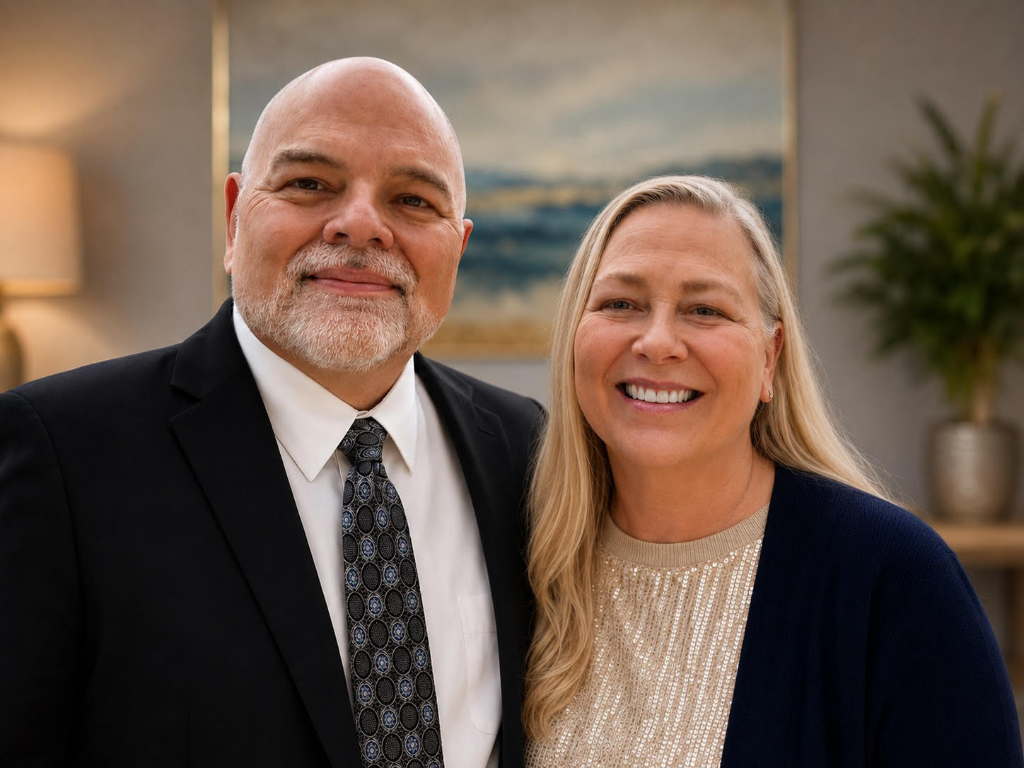
Wayne & Diana's Family
Six children. Five adopted. Every one changed by FASD. Thirty-five years of learning what works.
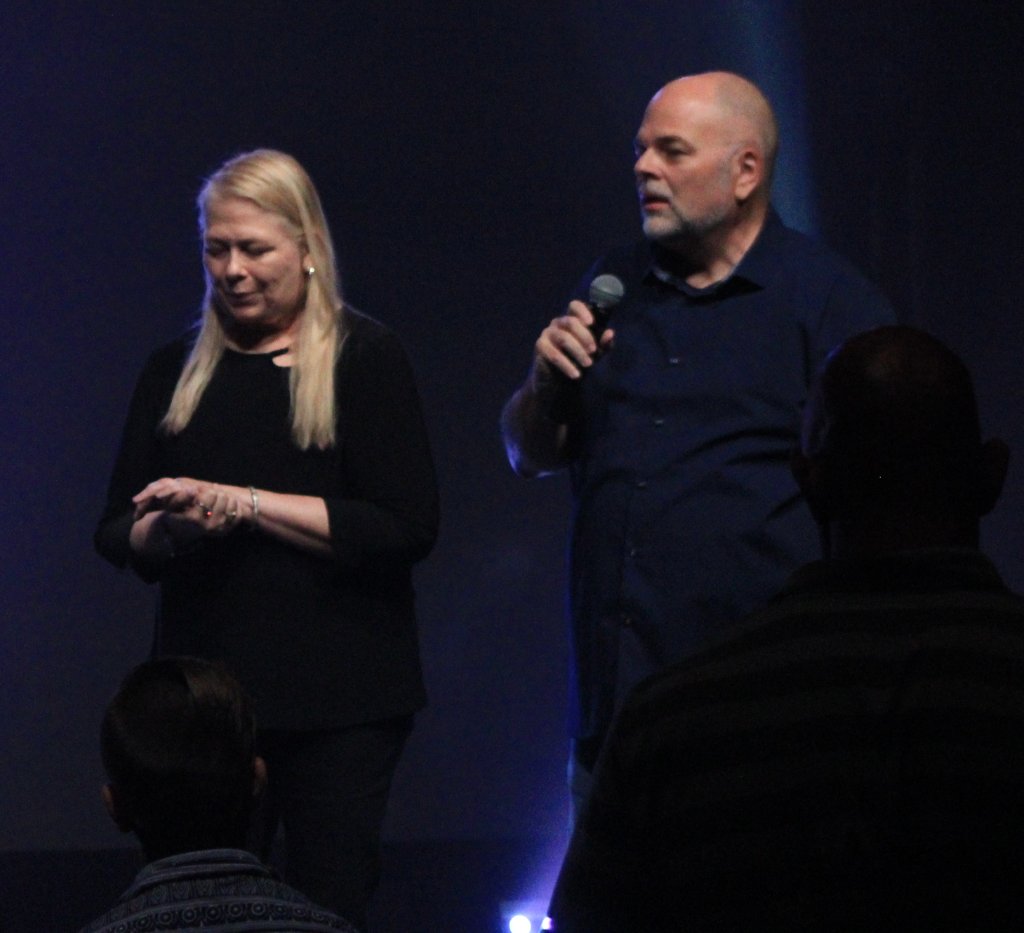
The story that started everything. Thirty-five years of foster care and adoption.
Wayne and Diana Lanier's family doesn't look like most families—and that was intentional. They were called to foster care and adoption not out of a romantic notion of changing the world, but out of a deep conviction that the Church should care for vulnerable children. They opened their home. They said yes. Again and again, they said yes. And in the process, they built a family that would become the foundation for everything Labor of Love does today.
The Decision
Most people, when they think about their family, envision having children that are biologically theirs. Wayne and Diana thought differently. They understood Scripture's call to care for the orphan and the vulnerable (Psalm 68:5, James 1:27). They understood that the local church should be the first response when children need protection and family.
So they opened their home to foster care. Their biological daughter was joined by five other children through the foster care and adoption process. This wasn't a one-time gesture of charity. It was a fundamental reorientation of their lives and their resources around the call to care for vulnerable children.
The Unexpected Challenge
But this story isn't a fairytale of love conquering all obstacles. It's a story of learning the hard way. Of discovering that five of their six children were impacted by Fetal Alcohol Spectrum Disorders (FASD)—a condition that affects emotional regulation, impulse control, learning, and social skills.
In the early days, Wayne and Diana didn't have the language for what they were facing. They had advice that didn't work. They had judgment from people who didn't understand. Teachers blamed poor parenting. Extended family questioned their judgment. Friends wondered why these children were so difficult, so unpredictable, so emotionally dysregulated.
Wayne and Diana had to figure out, through years of trial and error, what FASD actually is. They read everything they could find. They went to conferences. They talked to other families. They experimented with different parenting approaches, different educational strategies, different behavioral interventions.
Learning What Works
FASD doesn't respond to typical parenting strategies. Standard discipline—timeouts, loss of privileges, logical consequences—often backfires with children affected by FASD. A child with poor impulse control doesn't learn from punishment. A child with attachment issues doesn't respond to shame-based discipline.
What Wayne and Diana discovered, over years, was that FASD-affected children need something different. They need:
- •Structure and predictability — Clear expectations, consistent routines, advance notice of transitions
- •External support systems — Visual schedules, timers, reminders, supervision that looks different than typical parenting
- •Trauma-informed care — Understanding that behaviors are symptoms, not character flaws
- •Educational accommodation — Working with schools to provide appropriate support and modifications
- •Community of support — Knowing other families, accessing professional resources, getting regular relief through respite care
These weren't strategies Wayne and Diana learned from a parenting manual. They developed them through lived experience, through failure and adjustment, through a commitment to understand their children and meet them where they were.
The Redemptive Arc
What's remarkable about Wayne and Diana's story is that despite the challenges—and the challenges were real, deep, and ongoing—their five adopted children didn't just survive. They thrived.
Their children became gentle leaders. They became artists and musicians. They became protectors of the vulnerable. They became joyful worshippers who understood grace not as theory but as lived experience. They became whole people who knew their limitations and their strengths, who knew they were loved unconditionally, and who were changing the world around them.
This wasn't because FASD disappeared. It didn't. These children still have FASD. They still face challenges with impulse control, with memory, with abstract thinking. They still process the world differently than children not affected by prenatal alcohol exposure.
But they learned to work with their brains, not against them. They learned that their diagnosis was not their identity. They learned that their struggles were real but not their fault. They learned that there were people—their parents, their faith community, their supporters—who would stick with them not because they were easy to be around, but because they were loved.
From Personal Journey to Ministry
Years of living this reality, years of mistakes and learning, years of seeing their children struggle and then flourish—all of that has been translated into ministry. Wayne and Diana are now using their experience to equip churches, families, and communities to walk the foster care and adoption journey with eyes open and hearts prepared.
They're training churches on how to support foster families—not with platitudes but with practical help. They're teaching educators and administrators how to see the child behind the behavior. They're showing other adoptive families that FASD doesn't erase possibility—it just requires a different approach.
They've created resources, written curricula, spoken at conferences, mentored hundreds of families. They've used their platform not to hide their struggles but to hold them up and say, "This is real. This is hard. But this is also redemptive, and help is available."
The Church's Role
At the heart of Wayne and Diana's story is a conviction: the Church should be the first response to foster care, not the last resort. When a child is removed from an unsafe home, the Church should be there—providing emergency respite, offering support to the child's biological family where possible, opening homes, walking the journey with foster and adoptive families.
This is different from how most of us think about church. We think of church as worship services, small groups, maybe community service projects. But for Wayne and Diana, church is adoption. Church is foster care. Church is the body of Christ saying, "These children belong to us. These families are ours. And we will walk with them."
This conviction has shaped everything Labor of Love does. Their internal slogan is: "Let the church be the church." Let the church be the family for the orphan and vulnerable. Let the church be the support system for families who've adopted. Let the church be the community that makes foster care possible.
What Their Children Became
This is the most important part of their story: their five adopted children—all five affected by FASD—have become people of wholeness, purpose, and impact. They're not victims of their diagnosis. They're not case studies for FASD. They're whole people with gifts, struggles, dreams, and callings.
Some are in careers where they're serving others. Some are in relationships where they're loving deeply. Some are worshipping with genuine faith. Some are mentoring younger people who are facing similar challenges. They understand themselves. They know their limitations and their strengths. They know they belong to a family, a faith community, and a God who loves them not despite their FASD but as their whole self.
This is what FASD looks like when it's met with understanding, patience, structure, and grace. This is what happens when a family says yes not just once, but again and again, learning and growing through every season.
"You don't erase FASD. But you can build a new story around it—a story of hope. Our job is not to fix our kids. Our job is to love them, understand them, and help them understand themselves."
— Wayne Lanier
Why This Story Matters to Us
Wayne and Diana's story is why Labor of Love exists. It's proof that the Church can be the answer to foster care and vulnerable children. It's proof that families can navigate FASD and not just survive but thrive. It's proof that a personal conviction, lived out over decades, can become a legacy that changes thousands of lives.
Everything we do—from training churches to equipping families to advocating for vulnerable children to providing respite care networks to developing FASD support groups—flows from the example they've set. They've shown us what it looks like to say yes to the hard thing, to learn from failures, and to build a family that reflects God's heart for the orphan.
They've also shown us that this isn't easy. Foster care and adoption come with grief, challenge, and complexity. Parenting children with FASD requires a particular kind of wisdom. Supporting families requires more than good intentions.
But they've also shown us that it's worth it. That the kingdom comes when we say yes to the vulnerable. That love is not a feeling but a practice. That grace is the ground we stand on.
How to Be Part of Stories Like This
If Wayne and Diana's story compels you, there are several ways to support families navigating foster care, adoption, and FASD:
- •Open your home: Become a foster family or mentor family through your local church
- •Provide respite care: Give adoptive families regular relief through scheduled respite
- •Train your church: Equip your faith community to understand and support foster and adoptive families
- •Support families financially: Help fund training, resources, and support for families navigating FASD
- •Advocate systemically: Push for policies and resources that support vulnerable children and families
Learn more: Foster Care & FASD support and training